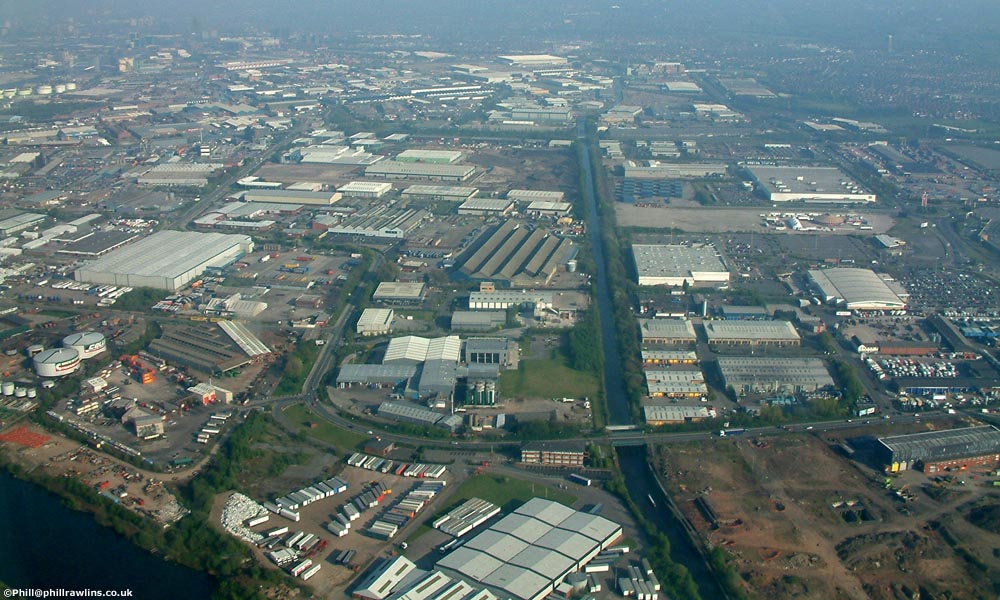
For most of the twentieth century the Manchester Docks at Salford were a working port, the inland terminus of the Manchester Ship Canal. Ocean-going ships came up the canal from the Mersey and discharged cargo into warehouses along nine kilometres of quayside, with the docks and Trafford Park together forming the largest industrial area in Europe.
Closure
Containerisation ended the Manchester Docks. Cargo moved to purpose-built deepwater terminals at Seaforth in Liverpool, and in 1982 the docks closed. What was left was a large area of redundant water, derelict warehouses and empty quays, a mile from the centre of Manchester and with nothing to recommend it but the water.
Reinvention
The redevelopment began in 1985, led by Salford City Council and the dock owners, and its first principle was to treat the docks as an asset rather than a liability: the water was cleaned up, the basins were kept, and the quays were used as the setting for new building rather than filled in.
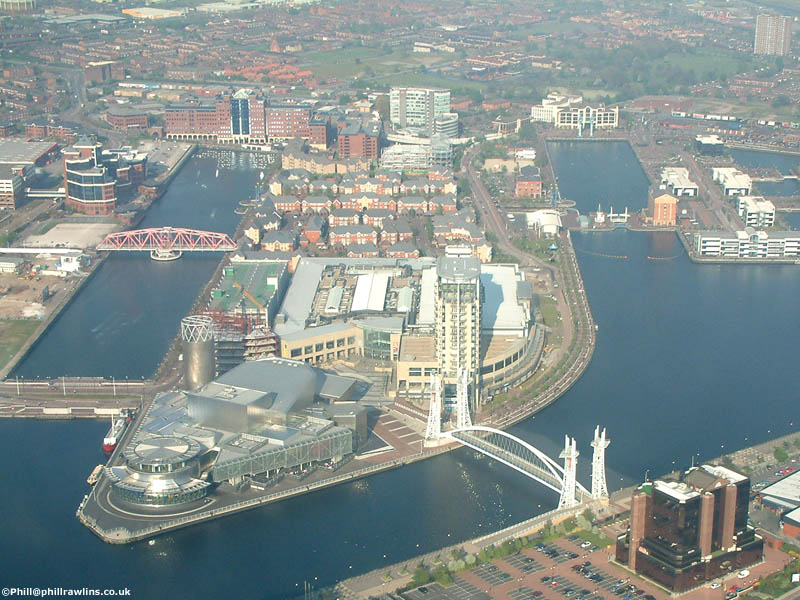
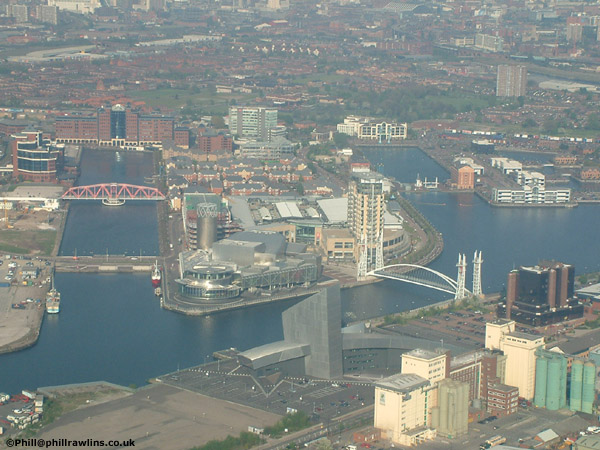
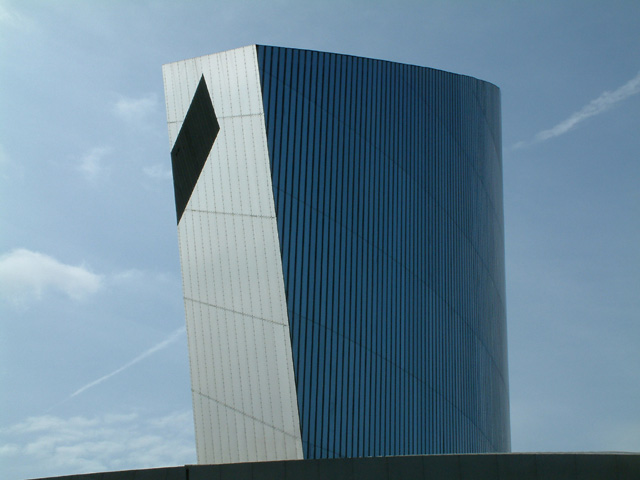
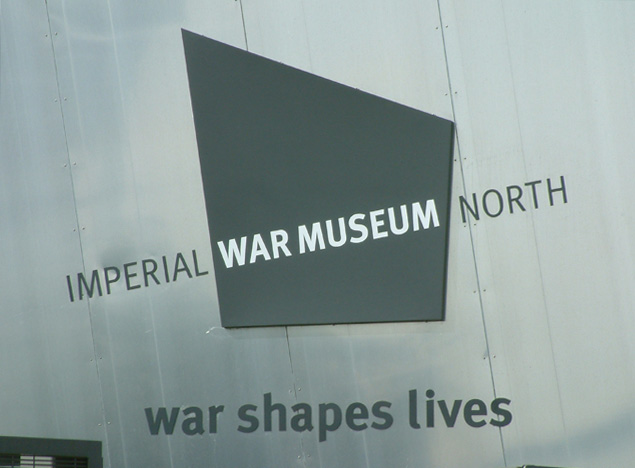
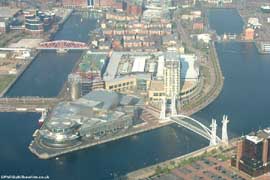
Over the following twenty years the area became Salford Quays, and the pace quickened sharply in the early 2000s. The Lowry opened in 2000, on Pier 8, containing a theatre, a gallery and a studio space in a building designed by Michael Wilford. The Imperial War Museum North, Daniel Libeskind’s aluminium-clad building shaped as fragments of a shattered globe, opened on the opposite bank at Trafford Wharf in July 2002. The Erie Basin, which had once held cargo ships, filled with apartments.
The photographs in this archive
The aerial views on this page were taken on flights over Manchester and Salford, which is the only way to see the shape of the Quays: from the ground the water is hidden behind the buildings, and from the air the relationship between the basins, the canal and the Lowry is immediately obvious.
The ground level photographs of the Imperial War Museum North, the Lowry and the waterfront are on the Around Manchester page. The ship canal at this point, and the Mode Wheel Locks a short distance upstream, are covered in the Ship Canal gallery.
What has changed since
Considerably. The site is now known as MediaCityUK as well as Salford Quays, and has been the home of large parts of the BBC since 2011, with ITV following. The Imperial War Museum North and the Lowry both remain, and the footbridge that crosses the canal between them has become one of the most photographed structures in Greater Manchester.
The docks in these photographs were still recognisably docks. That is the value of them.