Barton Aerodrome is home to the Lancashire Aero Club, the oldest flying club in the UK, and has recently celebrated its 80th anniversary. Barton was purpose built in 1927 by the Manchester Corporation as the first municipal airport in the country.
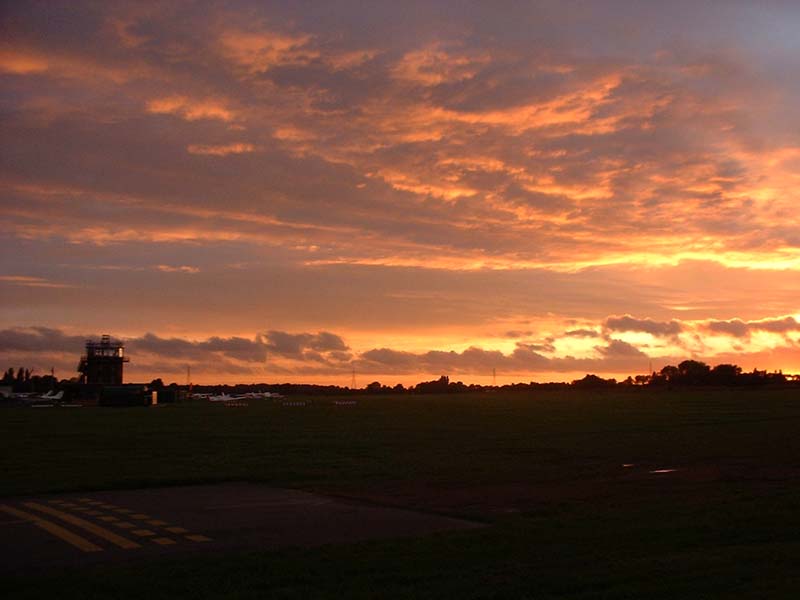
Several original buildings are still standing on the site, one of them being the control tower, which is the oldest working control tower in the country. Barton is still a thriving airport, with microlight and helicopter flying schools as well as club facilities and a visitors centre.
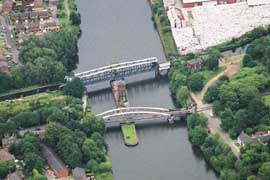
Barton Aerodrome (ECGB) is located just outside Eccles on the A57, close to junction 11 of the M60. It occupies a flat, low-lying site beside the Manchester Ship Canal, which is what makes the approach at Barton so distinctive: the canal, the Bridgewater Canal and the swing bridges are all within sight of the circuit.
What it is like to visit
Barton is a grass airfield with a tarmac strip, and it operates the way small airfields always have: a clubhouse, a balcony, a visitors centre, and aircraft parked wherever there is room. On a weekend it is busy with light aircraft and microlights; on a weekday it can be almost empty but for the flying school.
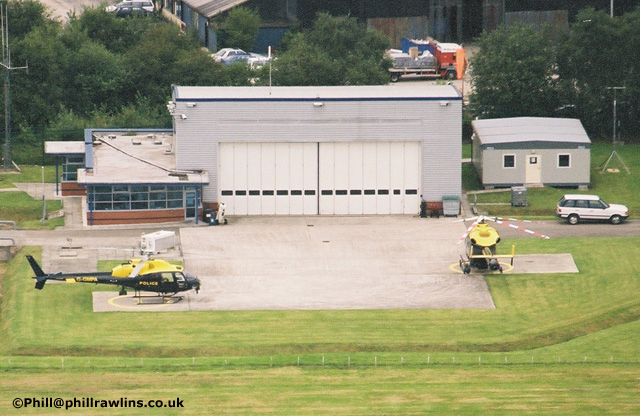
It is also one of the few places in the country where you can watch a police helicopter operate from the same airfield as a 1920s clubhouse. Greater Manchester Police’s Air Support Unit was based at Barton — Foxtrot 12 — alongside the aerodrome, operating twenty-four hours a day. See the police aircraft pages for what the unit flew.
Military visitors were not unusual either. A Royal Navy Merlin HM Mk1 called in during a recruitment exercise, and an RAF Gazelle was photographed on the same apron. Both are described on the military aircraft page.
Why Barton matters
When Manchester Corporation built Barton in 1927, the idea that a local authority should provide an airport was new. It was followed by a much larger municipal airport at Ringway, which opened in 1938 and eventually took the name Manchester International Airport, leaving Barton to settle into the role it still occupies: a base for club flying, training and private aircraft.
That history is visible on the ground. The control tower, the clubhouse buildings and the general layout are of their period, and the aerodrome has been able to keep them because it never needed to expand into a modern commercial airport. It is, in effect, a preserved example of what a British municipal airfield of the late 1920s actually looked like.