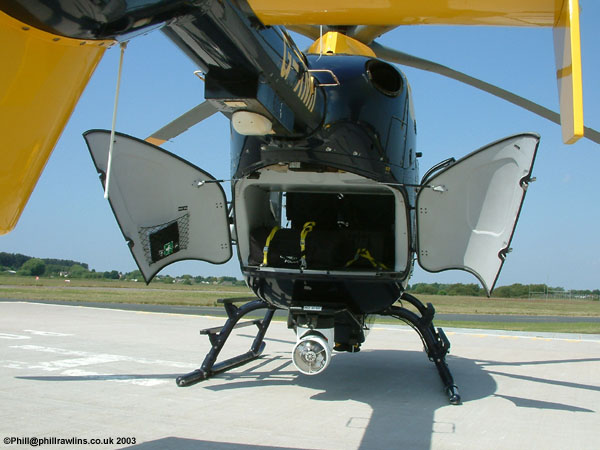
The Merseyside Police helicopter was a Eurocopter EC135 T1, registered G-XMII, powered by two Turboméca Arrius turbine engines and based at RAF Woodvale on the Lancashire coast.
The equipment fit
What follows was recorded from the aircraft itself, and is the most detailed equipment description in this archive.
- Thermal imaging. A digitally recorded thermal CCTV camera, feeding a microwave downlink so the picture could be watched on the ground.
- Euronav mapping. A mapping system able to jump from wide area Ordnance Survey style mapping to street level mapping detailed enough to show house numbers and locations. Being able to switch scale instantly is what makes a helicopter useful for directing officers on foot.
- Tracker. A receiver system for signals from transmitters fitted to vehicles and property, allowing a stolen vehicle to be followed irrespective of its appearance or registration.
- Radar altimeter. Which told the pilot his height above buildings as well as above the ground — a meaningful distinction when working low over a built-up area at night.
The cabin
From the front, the observer’s position had the camera monitor screen with the Tracker display above it, three smaller screens carrying aircraft information (fuel, temperatures and engine systems), and the normal instrument selection of altimeter, airspeed indicator and attitude indicator. In the rear, a second police observer sat with the Euronav system to hand.
The rear of the cabin had an access large enough for a stretcher, used when airlifting medical patients, and a side door providing the main working access for the observers.
Why the EC135
The EC135 became the standard British police helicopter of the 2000s, and the reasons are practical: a shrouded tail rotor that makes it quiet and safe to work around on the ground, a large cabin for its size, and enough power to carry a full sensor fit plus observers without much performance penalty. Merseyside’s aircraft was an early example of the type in UK police service.
What has changed since
Police aviation in the North West has since been reorganised: Merseyside, Greater Manchester and other forces moved to shared arrangements, and the aircraft and bases changed with them. RAF Woodvale remains an active airfield.