|
The Manchester Ship Canal |
|
| During the
early part of the nineteenth century Manchester a was booming city,
a world leader in the industrial revolution and growing in size and
prosperity. But in the latter half of the century it started to struggle. Manchester had goods to export and
a
growing population so needed to import food and other goods from abroad. Because of crippling charges imposed by Liverpool Docks and the Railway Companies trading was very unprofitable - some merchants and traders found it cheaper to transport goods over twice as far to the port of Hull such were the high cost of the charges! Not for the first time had there been thoughts of a "ship canal" from the west coast to Manchester but in 1882 a group of industrialists and businessmen formed the Manchester Ship Canal Company with the intention to build a canal large enough to let ocean going liners sail directly into Manchester from Liverpool. It was 1885 and after bitter opposition from Liverpool Dock Board and the Railway Companies before Parliament gave it's approval to the Bill yet it was still another 2 years before enough finance was raised and work started. With costs that had soared from £5.25million to £15million and an army of 16,000 navvies and numerous setbacks the Manchester Ship Canal was finally opened on the 21st May 1894 by Queen Victoria. |
|
| The Construction | |
|
Sir Leader Williams was the
Ship Canal's first engineer aided by the main contractor Thomas Walker.
They started by laying miles of railway track to move materials and remove the
excavated earth. At it's height the workforce consisted of 16,000 navvies,
some as young as 12, 100 steam excavators, nearly 200 locomotives, over
6,000 wagons, 182 steam engines, 59 pile engines, 196 horses, 212 steam
pumps and 194 cranes. |
|
|
Numerous other bridges and viaducts had to
be constructed including swing bridges and also the famous swing Aqueduct
at Barton. This replaced the existing Aqueduct built in 1767 by James
Brindley which was an engineering feat in itself and part of the original
aqueduct can still be seen today. The Swing Aqueduct carries 800 tonnes of water and has a total weight of 1200 tonnes. |
|
|
|
|
|
|
|
| Five sets of locks raise the canal over 60 feet along it's 36 mile length. These start with the tidal locks at Eastham which connect the canal with the Mersey Estuary, the next locks are Latchford locks at Warrington, then there are Irlam and Barton locks and finally Mode Wheel locks just outside of the terminal docks at Salford Quays. Along the length of the canal there were also numerous cargo handling docks, some of which are still used today. All of these contributed to the massive construction task which was not without problems, in the winter of 1891 flooding was a major setback submerging the equipment upto 40 feet in places, also the main contractor, Thomas Walker, died suddenly which created a lack of confidence in the project. | |
|
|
|
| Even into the twentieth century new bridges and viaducts were constructed. Two road viaducts have been built at Thelwall to carry the M6 Motorway over the canal and further to the west the Runcorn to Widnes link bridge. At Barton a high level road bridge which carries the M60 and most recently the Centenary Bridge at Trafford Park which raises the roadway to allow ships to pass underneath and a footbridge by the Lowry Centre which also rises. | |
| Near Stanlow the canal met with the River Gowy and one needed to pass the other and the ingenious solution was to have two huge cast iron siphons 400ft long placed underneath the canal to allow the river to flow freely. | |
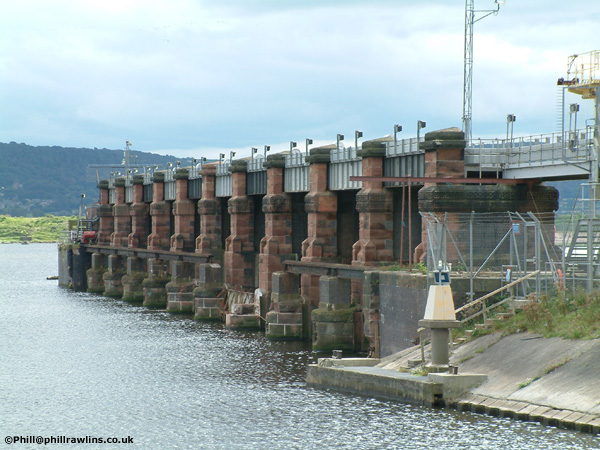
| The canals engineers were aware of the power of flood water and knew that it needed to be controlled, where the canal runs along side the River Mersey huge sluice gates were built which will allow thousands of gallons of water to flow off the canal and into the river to keep an even level on the canal. |
|
|
The Driving Force |
|
|
On the 1st January 1882 Daniel Adamson
called a meeting at his home "The Towers" in Didsbury, in attendance were
other leading industrialists of the area as well as civil dignitaries and
leaders of the time. The Manchester Ship Canal Company was formed. Daniel Adamson was the first Chairman of the Canal Company but was to die in 1887 shortly after the Parliamentary Bill was approved. Lord Egerton of Tatton became the Second Chairman who was to cut the first sod at Eastham. Sir Leader Williams was the first engineer of the canal and was the architect of most of the major structures including the swing aqueduct and the locks which were to be built. Thomas Walker was the canals main contractor, a civil engineer of some repute. Thomas Walker was responsible for the Severn Tunnel and the for his work for the Great Western Railway Company. |
|
|
The first Bill was submitted to Parliament in December 1882 and was approved by the Commons but rejected by the Lords, in 1883 a second Bill was also rejected. In 1885 the third Bill was finally approved and given Royal Assent on 6th August. Next £5million needed to be raised towards the construction costs and they were also forced to buy the Bridgewater Canal at a cost of £1.8million. They achieved this in just two years and work began in November 1887. |
|
|
The Canal helped the traders and manufacturers not just of Manchester but the whole of Lancashire, in it's first year nearly a million tonnes of cargo was to be carried by the canal and this was to see it's peak in the late 1950's of nearly 19 million tonnes. Trafford Park the first industrial estate to be purpose built attracted major industry and big business with the help of the Canal. Ford, Rolls Royce, Kellog's, Colgate Palmolive, Brooke Bond, Hovis, Co-operative Wholesale Society and many more all operated in the Park (some still do) using the Canal for transport of their goods. |
|
| The Modern Day Canal | |
|
Even today the canal is still heavily used
although the Manchester Docks which fell into disuse are now better known as
Salford Quays consisting of a an up-market housing development, a large
retail outlet, cinemas and the Lowry Centre with the Imperial War Museum
North on the opposite bank in Trafford Park. Over 7 million tonnes of cargo is still carried along the Canal consisting of oil, chemical and grain mainly destined for Stanlow, Ellesmere Port and Runcorn but there is still industrial traffic coming along to Partington, Irlam, Eccles and Trafford Park.
|
|
|
Other websites about the Manchester Ship Canal Eye Witness Manchester, Cruise along the canal SalfordOnline |
|
|
|
|
|
© Phill Rawlins MMIII - www.phillrawlins.com |
|